
I recently returned from a 9-day trip to Southern Italy, and I can honestly say it changed me. Sure, the breathtaking coastal views, ancient ruins, and charming towns left a lasting impression, but what truly spoke to my soul was the food—and more importantly, the culture behind it.
I’ve always loved food. I love preparing it, sharing it, and of course, eating it. But in Italy, I experienced food on a deeper, more emotional level. Their relationship with food is not just about nourishment—it’s about love, connection, tradition, and joy. There’s something magical about how Southern Italians celebrate their culinary heritage, and I found myself swept up in it completely. Their reverence for fresh ingredients, simple preparation, and long, leisurely meals with friends and family touched something in me. I knew I had to bring that spirit home with me.
If I had to summarize what I experienced in one sentence, it would be this: They appreciate and respect the freshest ingredients, simply prepared, and share meals with friends and family in a leisurely and social way.
Read that again!
In Southern Italy, meals aren’t just fuel—they’re a ritual. The table is where stories are told, laughter is shared, and memories are made. The food itself is humble, yet extraordinary, because it is treated with respect. Tomatoes that taste like sunshine. Basil so fresh it perfumes the entire kitchen. Olive oil that is buttery, peppery, and poured over everything with pride.
What stood out to me the most was how seasonal everything is. Italians—and really, most of the Mediterranean—eat what’s growing now. That means no strawberries in December or tomatoes in February. Instead, they build meals around what the land naturally provides at that time of year. It’s a beautiful and sustainable way of eating that many of us have lost touch with.
The Mediterranean diet isn’t a fad or a restrictive meal plan—it’s a centuries-old way of eating followed in regions like Southern Italy, Greece, Spain, Southern France, and Morocco. While each area has its own distinct culinary traditions, the underlying philosophy is the same: fresh, whole foods enjoyed in community.
So, what does a Mediterranean plate look like?
-
Fresh fruits and vegetables, eaten in abundance and in season
-
Whole grains, like hand-rolled pasta, barley, and steel-cut oats
-
Legumes and nuts, packed with fiber and healthy fats
-
Extra virgin olive oil— Oh my, the EVOO! They put that s*** on everything!
-
Herbs and spices for flavor instead of heavy sauces
-
Seafood and fish, several times a week
-
Poultry and eggs, in moderation
-
Red meat, just a few times a month
-
Cheese and yogurt, especially tangy Greek yogurt and aged cheeses like pecorino
-
And my personal favorite: red wine, in moderation, and always enjoyed socially
The diet is delicious, satisfying, and—bonus!—incredibly good for you. There’s a mountain of research supporting its benefits: lower risks of heart disease, stroke, diabetes, and even some cancers. It promotes longevity, reduces inflammation, and supports brain health.
But here’s the thing—those are just added perks. What drew me to the Mediterranean lifestyle wasn’t the science. It was how it made me feel. Alive. Connected. Joyful.
I knew I couldn’t just come home and go back to business as usual. I had fallen in love with a way of life, and I was determined to recreate it here, in my own kitchen.
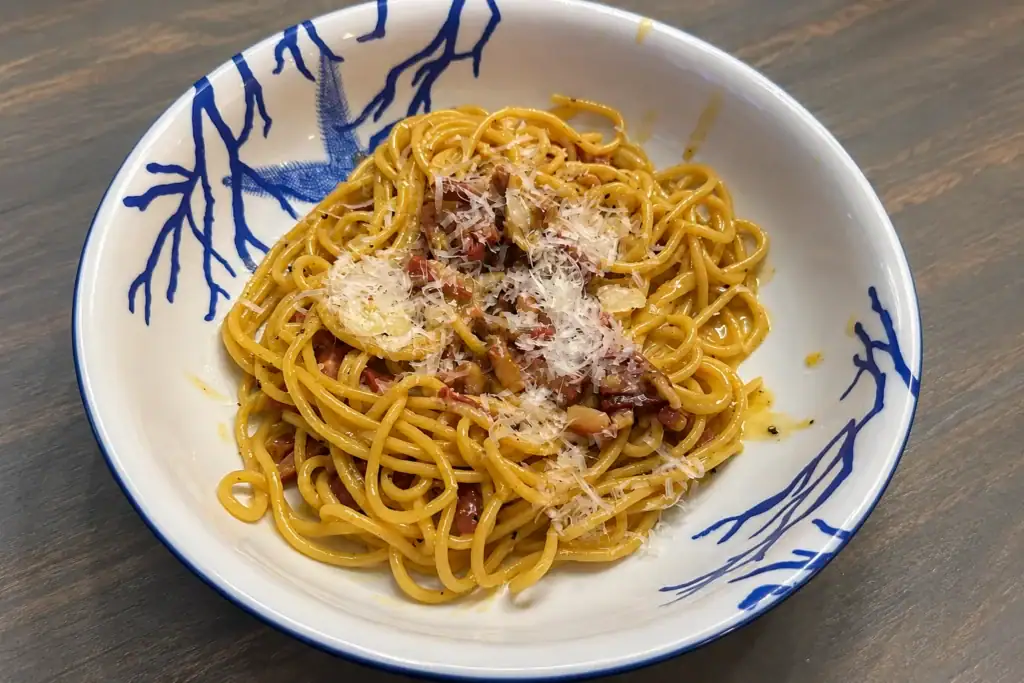
My first day back, I went straight to the local produce store and the neighborhood Italian market. I bought handmade pasta, imported pecorino cheese, pancetta, briny olives from the Mediterranean, and a bottle of good Chianti. I raced home and made an authentic spaghetti carbonara using only six simple ingredients—all from a cookbook I picked up in Amalfi.
And here’s the key part: my husband and I sat at the dining table, set with beautiful plates and wine glasses, candles lit, phones off, TV off. We took our time. We savored every bite. It was a most special dinner.—and it only took 25 minutes to make.
Next, I bought a book about the history of the Mediterranean diet to immerse myself in the traditions, philosophy, and stories behind it. I wanted to understand not just what they eat, but why. The connection between food and culture in this part of the world is profound—it’s not just about ingredients, but about ancestry, heritage, and identity.
Today, a box arrived on my doorstep from a local farm: seasonal fruits and vegetables, free-range eggs, raw honey, and even homemade dog treats for Shannon, our beloved pup. Knowing that everything in that box came from nearby, and that it supports small farmers, made it all the more meaningful.
Next on my list? Visiting every local farm, seafood market, and butcher I can find. I want to know what they grow, raise, and harvest, and when. I want to shake hands with the people who grow my food. I want to plan my meals around what’s in season. That’s the heartbeat of the Mediterranean approach.
My journey is just beginning. I’m planning to visit restaurants that specialize in Italian, Greek, Spanish, and French cuisine—not just to eat, but to learn. I want to talk to the owners and chefs about their backgrounds, the dishes they serve, and the traditions they’ve brought with them. I want to gather recipes, hear stories, and bring those flavors into my own home.
I’m also planning to host more dinners. Not fancy, Pinterest-worthy affairs. Just casual, delicious, love-filled meals with friends and family. Meals where we sit down and talk, laugh, and enjoy being together. Meals that remind me of Italy.
Yes, the Mediterranean diet is good for your body. But for me, it’s even more important that it’s good for the soul. It’s about slowing down and being present. About appreciating the beauty in simplicity. About honoring the land and the people who nourish us.
We live in a world that moves too fast. Meals are eaten in cars or in front of TVs. We overcomplicate things, or worse, we settle for food that doesn’t nourish us. The Mediterranean lifestyle is a gentle rebellion against all of that. It says: take your time, eat well, love fiercely.
If you’ve ever been curious about the Mediterranean diet, let me say this: it’s not about following strict rules or counting calories. It’s about joy. It’s about connection. And it’s about celebrating real, fresh, seasonal food—just the way nature intended.
So light a candle. Pour a glass of wine. Make something simple and beautiful. And share it with someone you love.
That’s the real Mediterranean secret. And I’m all in.


