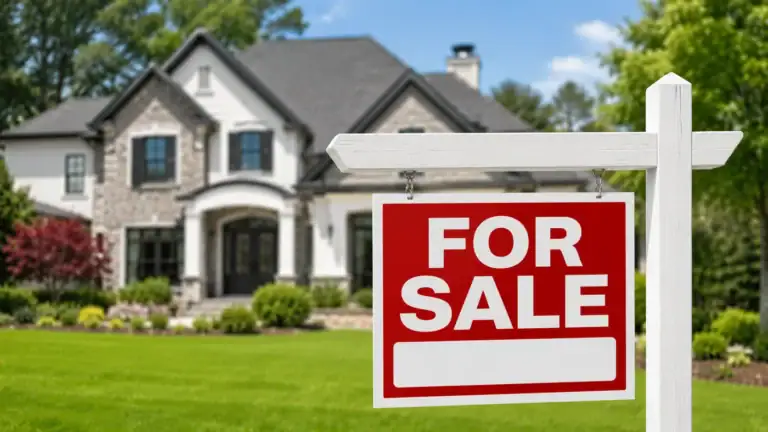
The market has changed. Here’s what today’s sellers need to know to get the best possible price for their home.
Selling a home in today’s market requires a different strategy than it did just a few years ago.
Buyers have more choices. Mortgage rates remain a significant factor in affordability. Inventory has increased in many markets, and buyers are taking more time to compare homes before making a decision.
That doesn’t mean homes aren’t selling.
It means buyers are becoming more selective.
Florida Realtors reported that Florida’s single-family home sales increased year-over-year in June 2026, while inventory remained at approximately a 4.5-month supply. Condo and townhouse inventory was considerably higher at 8.1 months.
And nationally, July existing-home sales declined 1.7% from June as mortgage rates moved higher, reinforcing the importance of affordability and value in today’s market.
So, what does that mean if you’re thinking about selling?
It means you can’t simply put a price on your home based on what your neighbor received last year—or what you believe your home should be worth.
You have to give today’s buyer a reason to choose your home over the competition.
Here are the strategies I recommend to maximize your home’s selling price in the current climate.
1. Price It Right From the Beginning
This is the most important strategy—and one of the most misunderstood.
Some sellers believe they should “leave room for negotiation” by pricing their home higher than the market supports.
Unfortunately, that strategy can backfire.
Today’s buyers are sophisticated. They are looking at competing properties online, comparing recent sales, watching price reductions and paying attention to how long a property has been sitting on the market.
If your home is overpriced, you may miss the strongest wave of buyer attention when the property first comes to market.
And once a listing begins accumulating days on market, buyers may start wondering:
“What’s wrong with it?”
The best listing price isn’t necessarily the highest price you can imagine.
It’s the price that positions your home to attract the largest pool of qualified buyers while creating a compelling value proposition.
Florida Realtors specifically recommends using current market data—including active inventory, months of supply, new listings, pending sales and closed sales—to help determine realistic pricing.
2. Don’t Price Your Home in a Vacuum
One of the biggest mistakes sellers make is looking only at what has sold.
Comparable sales are extremely important, but they are only part of the picture.
I also want to know:
- What is currently competing with your home?
- How many similar properties are available?
- How long have those properties been on the market?
- Have they reduced their prices?
- What features do competing homes offer?
- Are buyers choosing newer or more updated homes?
- How does your home compare in condition?
- What are buyers seeing when they search online?
In a market with more choices, your competition is just as important as your comps.
A home may have been worth $650,000 six months ago, but if buyers now have five similar homes to choose from, the pricing strategy may need to change.
3. Make Your Home Look Move-In Ready
Today’s buyer is often looking for convenience.
With higher mortgage payments, insurance costs, taxes and everyday expenses, many buyers don’t have the appetite—or the budget—to immediately take on a long list of projects.
That makes presentation extremely important.
Before listing, look at the home through a buyer’s eyes.
Could the buyer move in without immediately needing to:
- Paint?
- Replace flooring?
- Repair obvious maintenance issues?
- Clean up the landscaping?
- Replace outdated light fixtures?
- Deal with deferred maintenance?
- Make repairs required for insurance or financing?
You don’t necessarily need to remodel your entire house.
In fact, Florida Realtors recently highlighted that costly renovations may not always make sense in a price-sensitive market. Sellers may be better served by focusing on cleaning, maintenance, safety, insurance and financing considerations.
The goal isn’t to make your home perfect.
The goal is to remove the reasons a buyer might say, “We’ll keep looking.”
4. Focus on the Improvements That Actually Matter
Not every improvement provides the same return.
Before spending $30,000 on a renovation, ask:
Will this help my home sell for more—or will it simply make me feel better about putting it on the market?
That’s an important distinction.
I generally recommend prioritizing improvements that affect a buyer’s immediate perception:
High-impact improvements often include:
- Fresh interior paint
- Professional cleaning
- Decluttering
- Landscaping and curb appeal
- Addressing obvious repairs
- Updating dated fixtures
- Improving lighting
- Deep cleaning kitchens and bathrooms
- Removing strong odors
- Making outdoor spaces attractive and functional
The goal is to spend strategically—not emotionally.
5. Don’t Underestimate the First Impression
Before a buyer ever walks through your front door, they’ve probably already seen your home online.
That means your listing photos are your first showing.
Professional photography matters.
So does staging.
So does the exterior.
A beautifully updated kitchen won’t matter if the first photograph shows an overgrown yard, a cluttered room or a dark interior.
Your home needs to make buyers want to click.
Then it needs to make them want to schedule a showing.
And finally, it needs to make them want to write an offer.
Think of the process as a series of decisions:
Online attention → Showing → Emotional connection → Offer
If you lose the buyer at step one, the other steps never happen.
6. Don’t Ignore Insurance and Inspection Issues
This is particularly important here in Florida.
Today’s buyers aren’t just evaluating the kitchen and backyard.
They’re thinking about:
“Can I insure this house?”
Roof age, electrical systems, plumbing, wind mitigation, flood exposure and other property conditions can have a major impact on a buyer’s willingness to move forward.
If you already know there are issues that could affect insurance, financing or inspections, it’s worth discussing them with your Realtor before putting the home on the market.
Sometimes addressing a problem before listing can prevent a much larger negotiation after an offer is received.
7. Highlight the Lifestyle—Not Just the House
Especially here on the Space Coast, buyers aren’t simply purchasing square footage.
They’re buying a lifestyle.
Is your home close to the beach?
Does it have a fantastic outdoor living area?
Is there room for a boat?
Is it convenient to shopping and restaurants?
Is the neighborhood quiet?
Are there beautiful walking areas?
Is the backyard perfect for entertaining?
These aren’t just “features.”
They’re part of the reason someone chooses your home instead of the one down the street.
Your marketing should tell that story.
8. Make Your Home Easy to Show
This sounds simple, but it can have a significant impact.
If buyers have to work around complicated showing restrictions, limited hours or difficult access, they may simply move on to the next property.
Today’s buyers have options.
You want to make it as easy as possible for their agent to say:
“Let’s go see it.”
And when the buyer arrives, the home should be clean, comfortable, bright and inviting.
9. Watch the Market After You List
Pricing your home correctly on day one doesn’t mean you stop paying attention after it goes live.
The market gives you feedback.
That feedback comes in the form of:
- Online views
- Saves and shares
- Showing activity
- Agent feedback
- Open house activity
- Competing listings
- New listings
- Price reductions
- Pending sales
If you’re getting lots of online activity but few showings, that’s information.
If you’re getting showings but no offers, that’s information too.
And if comparable homes are going under contract while yours isn’t, that’s perhaps the most important information of all.
The market is always talking.
A good listing strategy listens.
10. Be Prepared to Adjust
This is probably the hardest part for sellers emotionally.
You may have a number in your head.
You may have invested a significant amount of money in the home.
You may know what your neighbor sold for.
You may feel that your home is better.
And you may be right.
But ultimately, the market doesn’t pay based on what a home should be worth.
It pays based on what a qualified buyer is willing and able to pay today.
Florida Realtors notes that local conditions can vary considerably by community, price point and property type, making careful pricing and preparation particularly important.
The sellers who adapt to market feedback generally have a much better chance of achieving their goals than those who simply wait for the market to return to yesterday’s conditions.
The Bottom Line: Maximize Value, Not Just Price
Getting the highest possible price for your home doesn’t necessarily mean listing it at the highest possible number.
It means creating the strongest possible combination of:
Price + Condition + Presentation + Marketing + Accessibility + Negotiation Strategy
When those pieces work together, you give buyers a reason to choose your home.
And that’s the goal.
Because in today’s market, the best-priced and best-presented home doesn’t have to be the cheapest home—it simply has to feel like the best value.
Thinking About Selling?
If you’re considering selling your Brevard County home, I’d be happy to help you determine what today’s market is actually saying about your property.
We’ll look at the recent comparable sales, your current competition, inventory, buyer demand and the improvements that are most likely to make a difference.
My goal isn’t to tell you what you want to hear about your home’s value.
My goal is to help you make the decisions that give you the best opportunity to sell for the highest price the current market will support.
If you’re thinking about selling in Satellite Beach, Indian Harbour Beach, Indialantic, Melbourne Beach, Cocoa Beach, Merritt Island, Viera or anywhere else in Brevard County, let’s talk about your strategy before you put the “For Sale” sign in the yard.